
The Voltra I Mode Guide: How I Use Each Mode to Train a Specific Adaptation
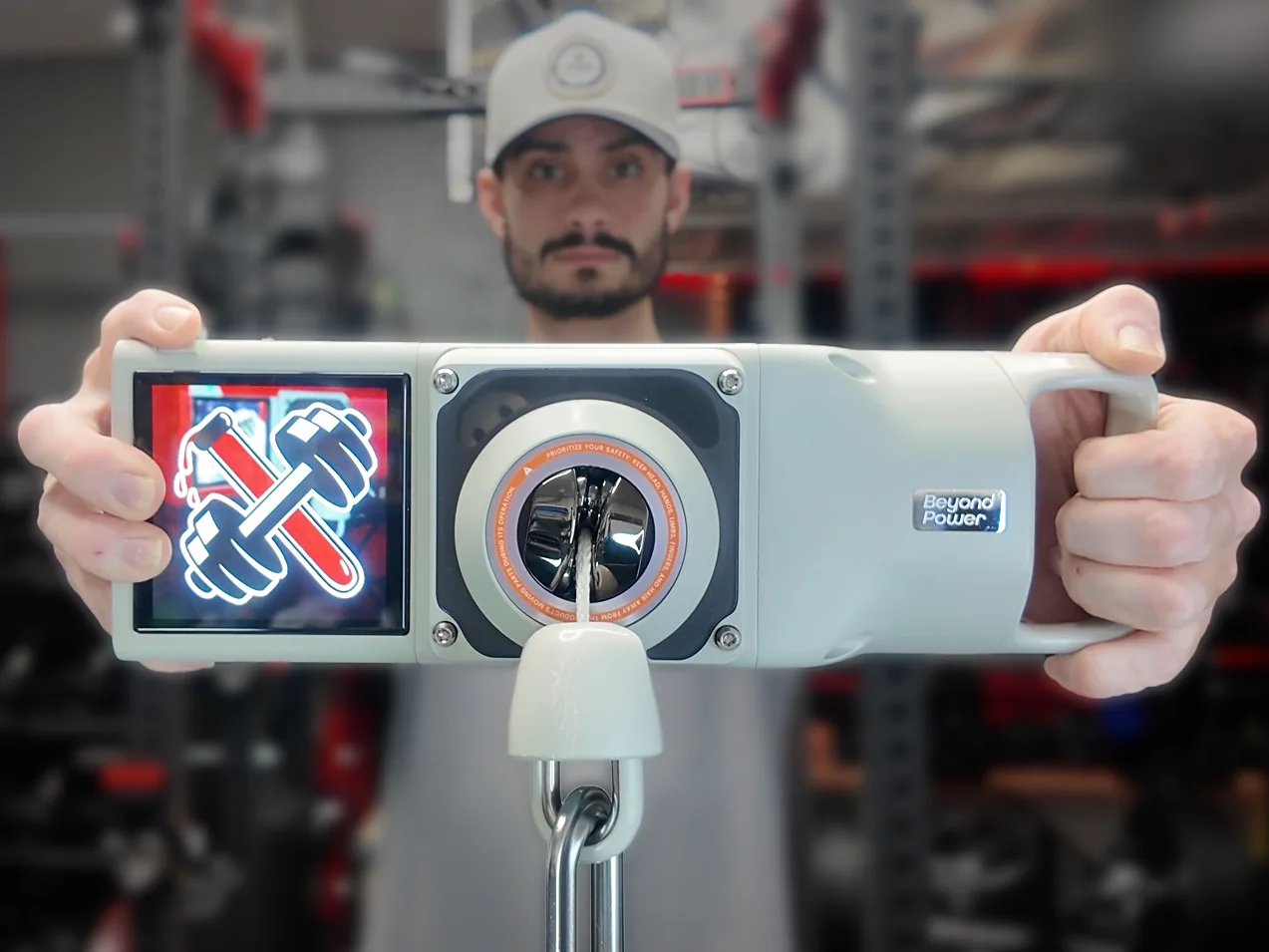
Most Voltra guides explain what each mode does. This one explains why you'd choose a mode, based on the biological quality you're trying to build: connective tissue load-bearing capacity, hypertrophy, strength through range, power, skill, deceleration or conditioning.
Start with the adaptation you want. Pick the mode that creates the right force environment for it. Then dose it. The same exercise can build very different qualities depending on how the resistance is shaped and where your effort goes.
I'm a Beyond Power affiliate. If you buy a Voltra with my link or code TISSUEGUY, I may earn a commission at no extra cost to you. Everything in this guide comes from my own training and programming with the unit.
Start with the adaptation you want
Each part of the guide has its own page. Jump straight to the goal you're training for.
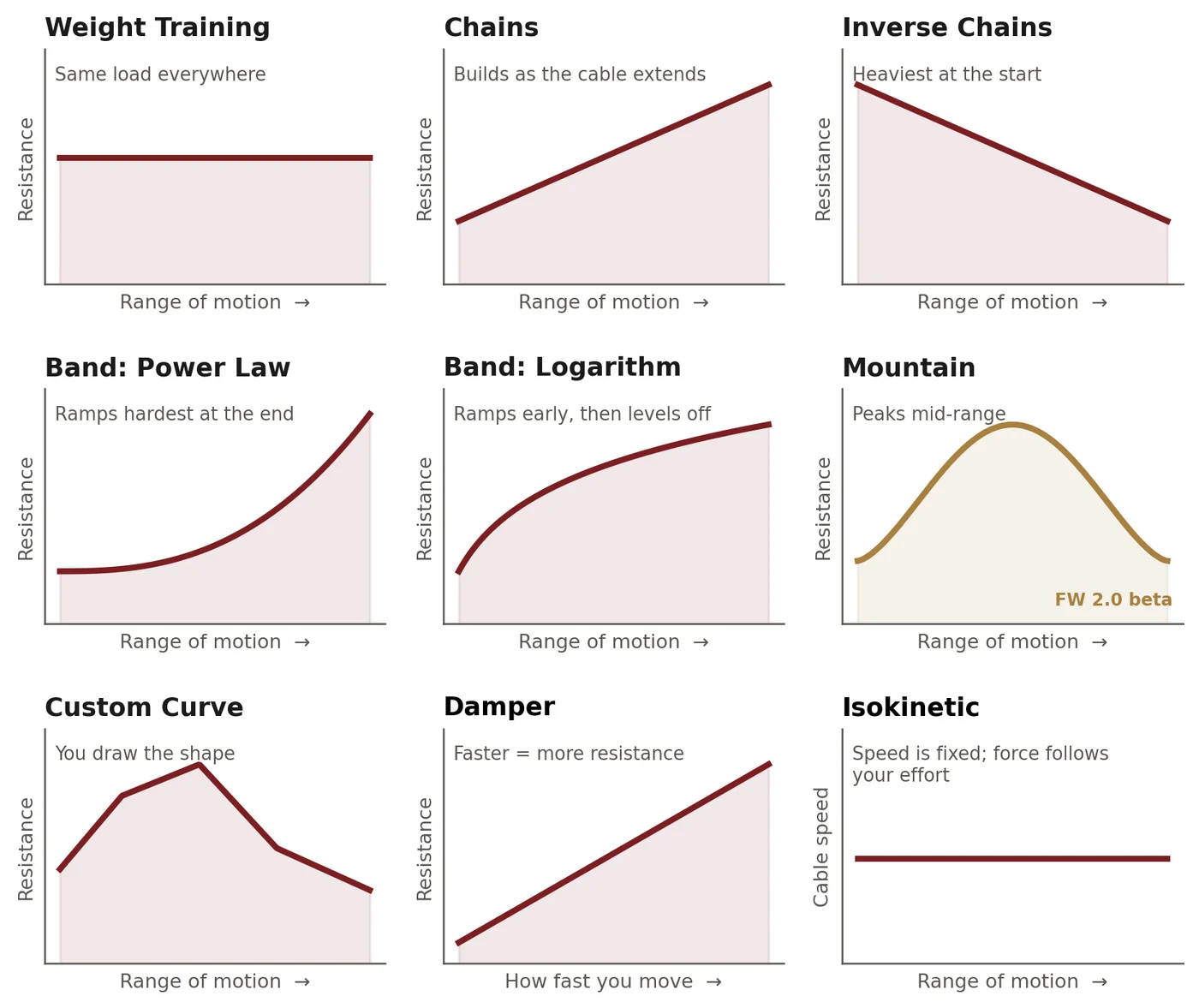
The shape of each resistance mode
Before you pick a goal, here's what each mode does to the resistance. Damper is plotted against speed and Isokinetic against cable speed, because those modes respond to how you move rather than where you are in the range.
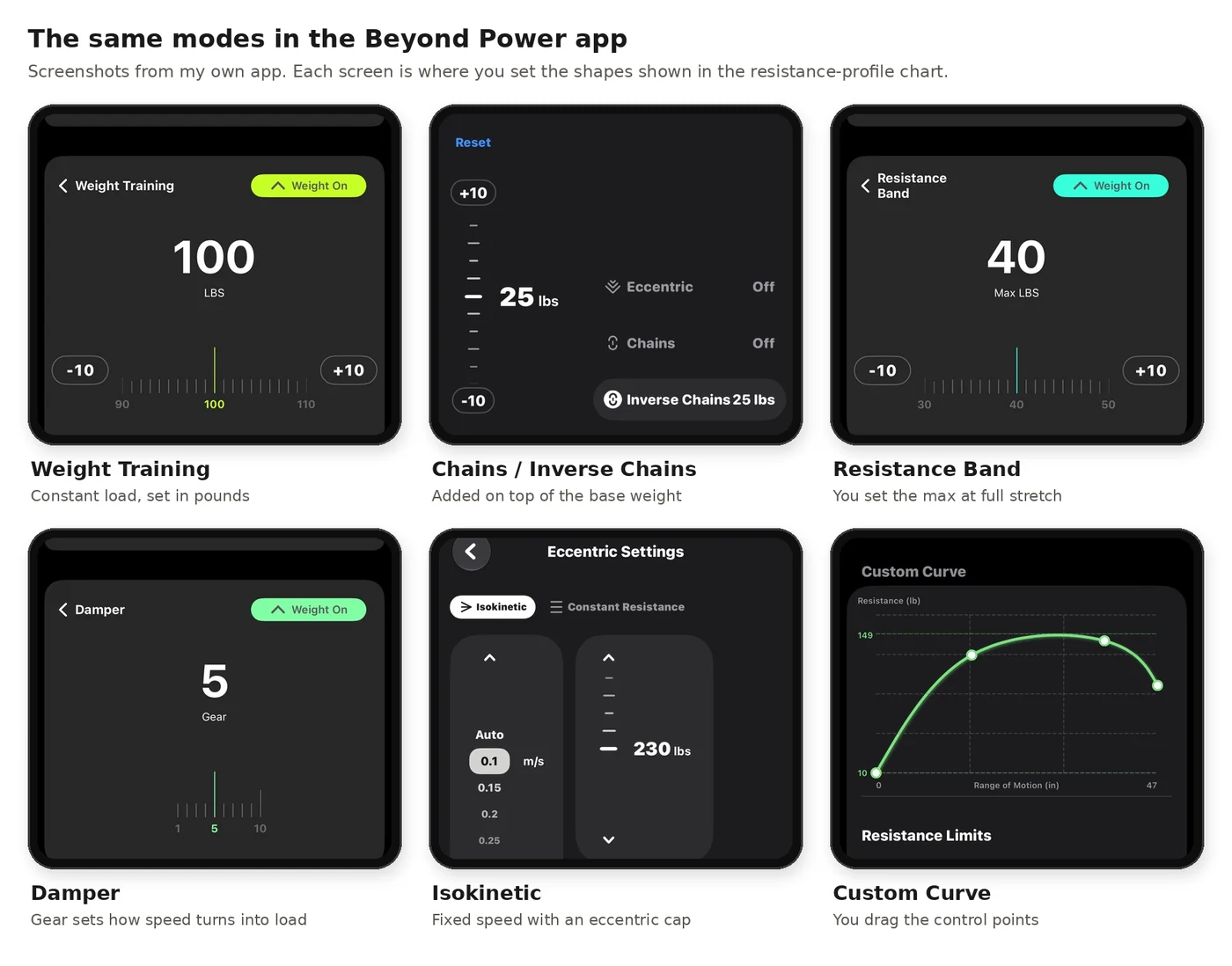
Here's where you set each of those shapes. These are screenshots from my own Beyond Power app.
Four principles behind every recommendation
1. Surf the resistance profile
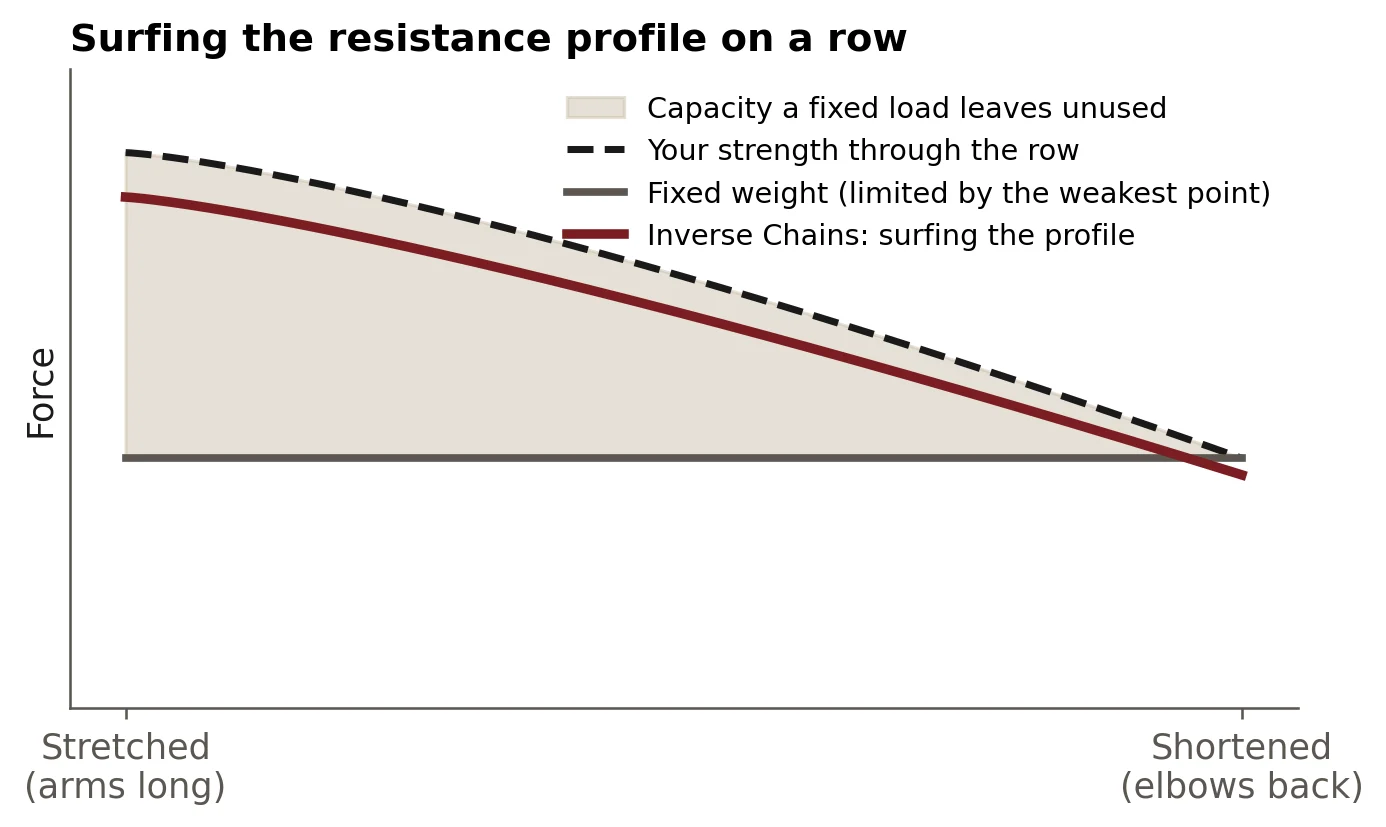
Every exercise has a strength curve: the positions where you're strong and the positions where you're weak. A fixed load can only match one point on that curve. The Voltra lets you shape resistance so it rises where you're strong and backs off where you're weak. I call this "surfing the resistance profile."
Strength curves are exercise-specific. On rows and pulldowns you're usually strongest at the stretch and weakest when fully shortened. On curls you're usually strongest in the middle of the range. Match the mode to the curve of the movement in front of you, not to a rule about "pulls" or "pushes."
There are always two curves in play: your strength curve and the exercise's own resistance profile, which comes from leverage and anatomical torque. Before you add a mode on top of an exercise, ask what the exercise is already doing. The preacher curl example on the Hypertrophy page shows why.
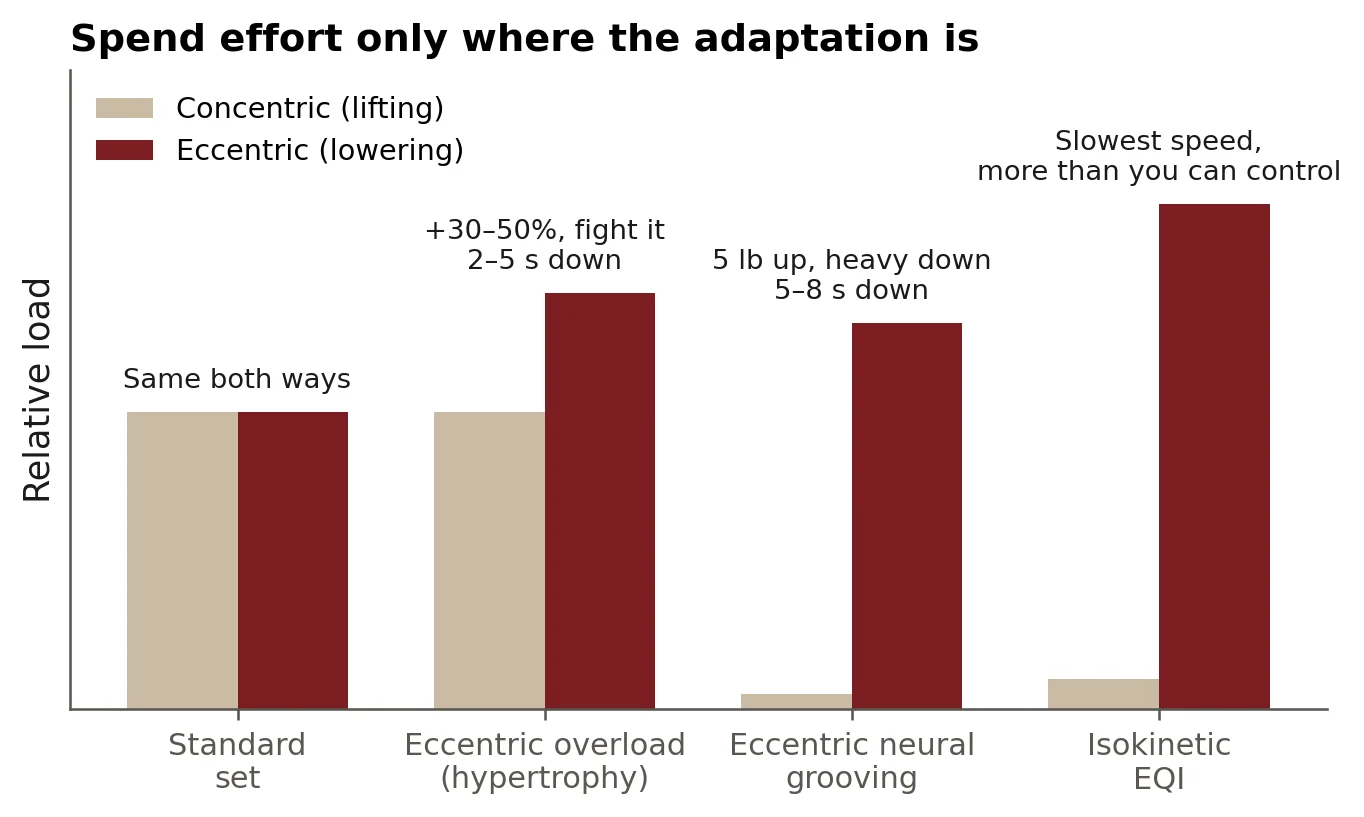
2. Spend effort only where the adaptation is
Effort and recovery are limited training resources. If the target is the lowering phase, there's no reason to burn energy grinding through heavy concentrics on every rep. Several of my setups drop the phase I don't care about to the minimum and load the phase I do. That way more of my effort goes to the target tissue and the outcome I want.
3. Positions are individual
End range varies widely from person to person, so I don't use standardized test or training positions for connective tissue work. My rule of thumb: to test or train a tissue's capacity, put that tissue on stretch and approach a tolerable level of discomfort. Then record that person's exact setup (mount height, cable length, joint angle, discomfort level) so every retest happens in the same personal position.
These tissue systems also need exposure to all the positions and environments they meet in daily life. One shoulder position won't carry over to everything your shoulder does. Vary your training positions, and keep a few personal benchmark positions for testing.
4. Methods are tools to rotate, not winners to crown
You'll see studies showing that variable resistance builds about the same amount of muscle as constant resistance. That's a real finding, but individual exercise studies can't give you the full picture of long-term programming. Most run for a few weeks to a few months, each group does one method, and participants are often untrained or new to that method.
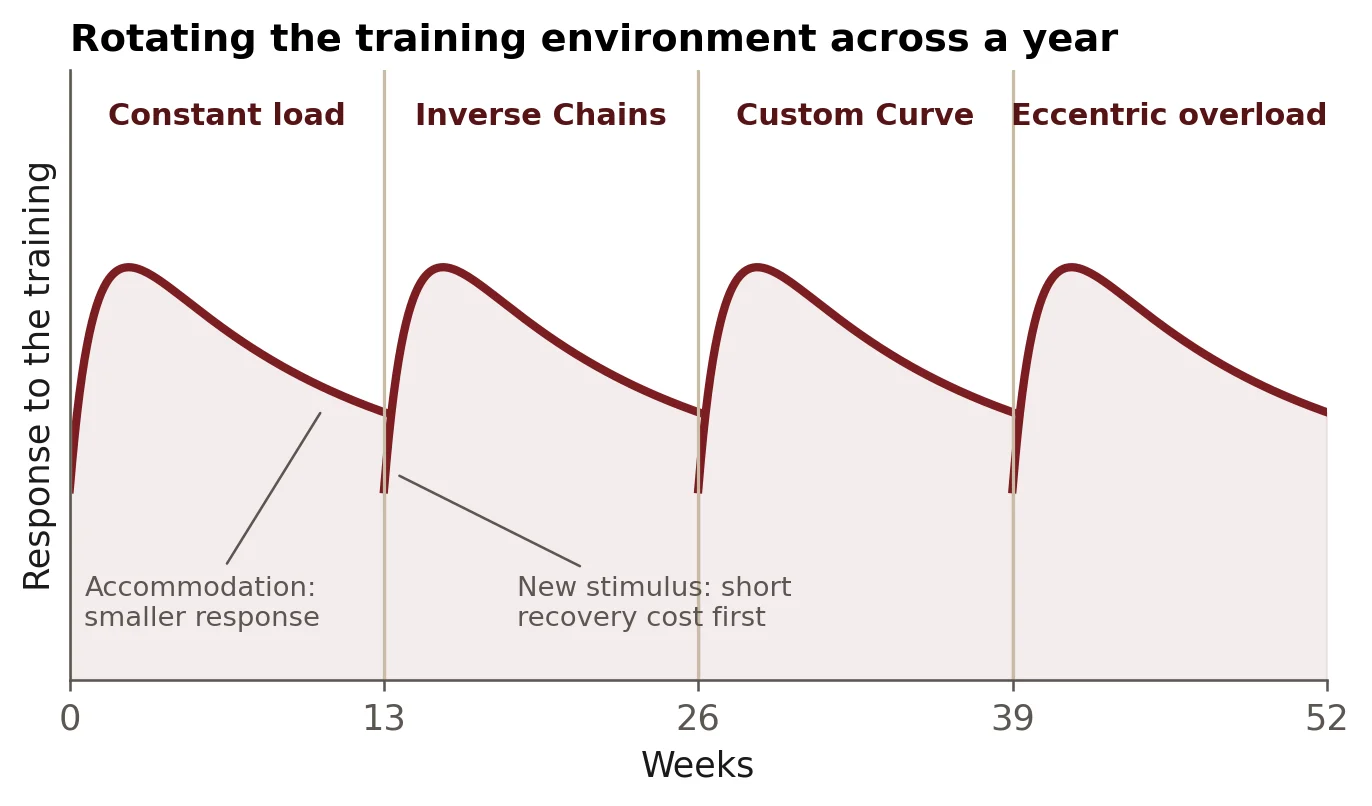
Hypertrophy responds to challenge, and challenge is highest when the stimulus is new: a new movement, a new modality of resistance or a new resistance profile the tissues aren't accommodated to yet. Repeat the same parameters long enough and the body adapts to that environment, so you have to raise some variable of challenge: volume, intensity, or the environment itself.
- For long-term programming, it matters less which method a study crowned. Over a year or more, changing the training environment is an effective way to introduce a novel stimulus and keep adaptation moving in the right direction.
- For reading studies, training history is a hidden variable. If participants weren't using a method before, part of what got measured is the novelty of the stimulus. Someone already used to that method would likely respond differently.
So instead of asking "which method is most effective?", I ask: "Which tool hasn't this person accommodated to yet, and does it point toward the outcome I want?"
Rotate deliberately, not randomly. A systematic review found that systematic exercise variation can enhance regional hypertrophy and strength, while excessive, random variation may compromise gains (Kassiano et al., JSCR). A new stimulus also costs some recovery first: early in training, much of the protein synthesis response goes to repairing muscle damage, and it tracks growth only once that damage settles down (Damas et al., Journal of Physiology). That's why I stay consistent with a training environment for a phase, then switch for the next one.
Quick map: goal → mode
Tap a goal to open its page.
| Goal | Primary modes | Key settings |
|---|---|---|
| Testing and daily readiness | Isometric, Isokinetic | Max efforts in a recorded personal position; compare against baseline |
| Connective tissue load-bearing capacity | Isometric (end range), Eccentric neural grooving, EQIs (Eccentric or Isokinetic), Inverse Chains | Short max isometrics; 5–8 s eccentrics; slowest isokinetic speed for EQIs |
| Hypertrophy | Eccentric overload, Inverse Chains, Custom Curves; Chains or Band when the exercise is light at the top | +30–50% eccentric, 2–5 s lowering; +25–60% Inverse Chains on pulls; rotate environments by phase |
| Strength through the full range | Isokinetic, Custom Curves | Max effort at a fixed speed; curve matched to the strength profile |
| Power and explosive intent | Damper, Chains, Band (Power Law), Concentric-only | End sets at about a 10% velocity drop |
| Skill and new movement patterns | Band (Logarithm), Damper | Smooth, forgiving resistance; quality over load |
| Deceleration | Damper | Belt squat belt or squat harness, arms free |
| Conditioning | Rowing, Ski | End sets at about a 20% velocity drop when you track speed |
Safety basics
- Don't change modes or settings under load. Bring the resistance down and return the cable to the start first (Beyond Power).
- Start lighter than you think with any new mode, and run a light test set after changing a curve.
- Keep your anchor stable and your line of pull clean. A mode can't fix a bad setup.